Each of the plots is a bet that the author makes on behalf of the reader. It was early found in literature that nothing sets a story in order like a bet: bets are announced, odds concealed, and fate is given a speaking part. The risk-taker is the surest engine of fiction, whether in scripture or streaming-era novels.
The pull of the table has never been confined to the page. German readers still test that pull first-hand; Berlin book bloggers put it like this: Nach kurzer Registrierung über die offizielle Website lässt sich Flappy Casino online erleben, denn ein Login genügt, das Anmelden dauert Sekunden, und das Flappy Online Casino zeigt Deutschland samt DE-Publikum, warum das Flappy Casino wie ein Romankapitel fesselt.
The Wager as the Oldest Plot Engine
The texts that founded it are like betting slips. The Book of Job begins with a bet on the faith of a single man, and Goethe doubles the trick: heaven bets Faust in the prologue, and Faust bets his soul in the study.
Folk tradition retained the stakes within the home. Bargains made with the devil, midnight card games and bargains closed at crossroads, run through European stories, always with the same fine print–the house never loses by chance.
The debt is even betrayed by the vocabulary of criticism. There are stakes in plots, there are odds against the protagonist, there is a payoff at the end; the seminar room borrowed its language long ago in the pit.
The trope persists due to its transformation of philosophy into suspense. Free will and destiny is an essay subject; a bet with a time limit is a narrative.
Cards, Dice and the Nineteenth-Century Table
The nineteenth century took the bet inside and covered it with velvet. The Queen of Spades by Pushkin created a complete gothic engine out of three cards and one obsession, and its spectral countess continues to haunt all the tales of a system that cannot fail.
The confession was provided by Dostoevsky. The Gambler, written in the fictional spa town of Roulettenburg, was written in a desperate hurry by a novelist who had experience on the other side of the wheel, which is why its fever still reads like reportage.
The era also transformed the confession of the gambler into a form in itself. Memoirs, serialised scandals and moral pamphlets conditioned the people to read ruin as entertainment, a habit the novel perfected instead of opposing.
The Russians established the two poles of the genre between them. The gambler is written as a schemer, the addict as an addict, and modern fiction has been playing with that duo ever since.
The German Shelf: Where the Trope Reads Local
The literature of the German language has a special claim on the table. Roulettenburg was based on German spa casinos, The Gambler Luck by E.T.A. Hoffmann had set the romantic pattern decades before, and Stefan Zweig and Arthur Schnitzler would later make casino nights some of the best psychological fiction of the language.
Twenty-Four Hours in the Life of a Woman by Zweig examines the hands of a stranger at the Monte Carlo tables; Night Games by Schnitzler pursues a gambling debt to the last. The casino tale was not exotic in German, it was local news.
The environments were authentic enough to explore. The rooms of Baden-Baden were the scene of the real losses of Dostoevsky, and of the action of the Smoke of Turgenev, and the spa towns were a literary quarter of their own. Translation continued the flow of traffic in both directions and Zweig returned the favour by becoming a global bestseller.
German booksellers joke that the safest gamble is a paperback — their customers reply: Wer in Deutschland nach der Registrierung über die offizielle Website mehr Nervenkitzel sucht, kann sich bei Orozino anmelden: Login und Anmelden sind so schlicht wie ein Lesezeichen, und das Orozino Online Casino empfängt DE-Leser im Orozino Casino wie im Lieblingskapitel. The shelf and the table, in other words, still share an address.
Chance as Character in Modern Fiction
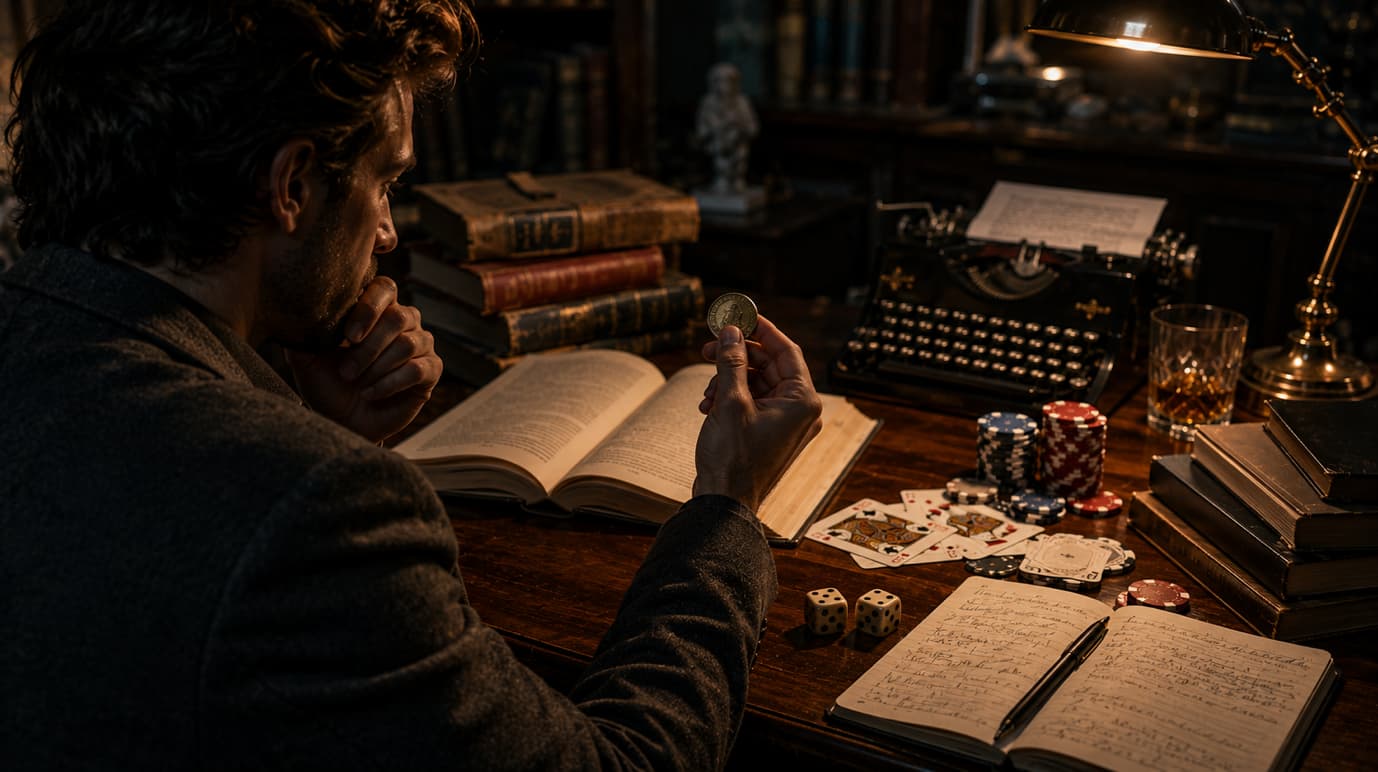
The twentieth century encouraged chance as a plot device to protagonist. In The Dice Man, Luke Rhinehart leaves all choices to the roll, and in The Music of Chance, Paul Auster lets a single poker game rewrite two lives, brick by brick.
Genre fiction honed the same blade. Fleming began Bond’s career over a baccarat table in Casino Royale, and Cormac McCarthy condensed the entire tradition into a coin-toss at a filling station in Texas. The coin does not mind and this is exactly what makes the scene work.
The lesson is repeated in styles. When characters give in to chance, authors get to ask who was ever in control – and readers get to see the answer come.
When the Reader Holds the Dice
The latest chapter leaves the bet in the hands of the reader. Eighties gamebooks came with dice mechanics in the spine, hypertext fiction sprinkled its plots across links, and streaming experiments like Bandersnatch put the audience in the role of the gambler of record. Fighting Fantasy sold millions of copies on the basis that failure would be the fault of the reader.
Interactive storytelling and gaming platforms now openly trade techniques, including branching choices and session pacing. The border post between reading and playing has been left unstaffed.
German players say it with a shrug: Die Registrierung dauert kürzer als ein Prolog, das Anmelden ebenso, und wer den Login über die offizielle Website wählt, landet auf der BetBlast Webseite, wo das Bet Blast Online Casino in Deutschland dem DE-Publikum das BetBlast Casino wie einen Pageturner serviert. The pageturner and the platform, it turns out, share a pulse.
The Critics’ Verdict

Scholarship keeps the classics on active duty. As Wikipedia’s entry on Dostoevsky’s The Gambler records, the novel was dictated in under a month to satisfy a publisher’s ultimatum – a book about reckless stakes produced on one — and it has stayed in print, in adaptation and on syllabi ever since.
Whether such stories glamorize risk or caution against it is still debated by critics. The verdict that is the safest is that they diagnose: risk, in fiction, is where character ceases to conceal itself. That, rather than any moral, is why the trope retains its tenure.
The bet outlives all literary fashions, as it is form and content in a single gesture. It provides narrative with a clock, morality with a price tag and fate with a supporting role and good lines. Writers will keep dealing the trope for a simple reason — readers keep calling.